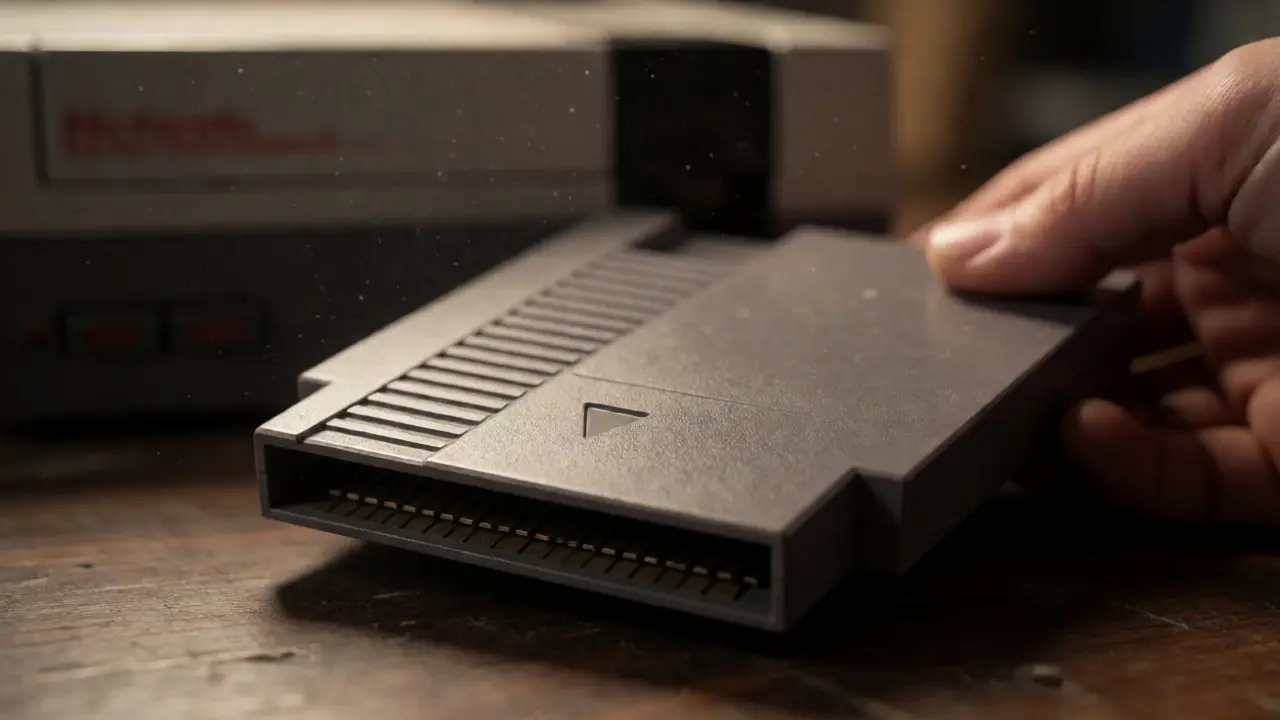
You just found a pristine copy of Super Mario Bros. 3 at a garage sale for five bucks. You rush home, blow the dust off, shove it into your NES, and... nothing. Or worse, a black screen with a blinking cursor. It’s frustrating, right? But before you toss that gray plastic brick in the trash, know this: most cartridge issues aren’t broken hardware; they’re dirty contacts. And here is the scary part-most people clean them wrong, permanently damaging the save battery or corroding the pins.
Cleaning cartridge-based video games is less about scrubbing away grime and more about chemistry and physics. You are dealing with delicate copper alloy contacts, porous plastic shells, and sometimes fragile lithium batteries. If you use the wrong solvent or too much force, you can turn a $5 find into a paperweight. This guide breaks down exactly how to restore these relics without destroying their value or functionality, whether you are a casual player or a serious collector in Portland looking to preserve history.
The Quick Fix Checklist
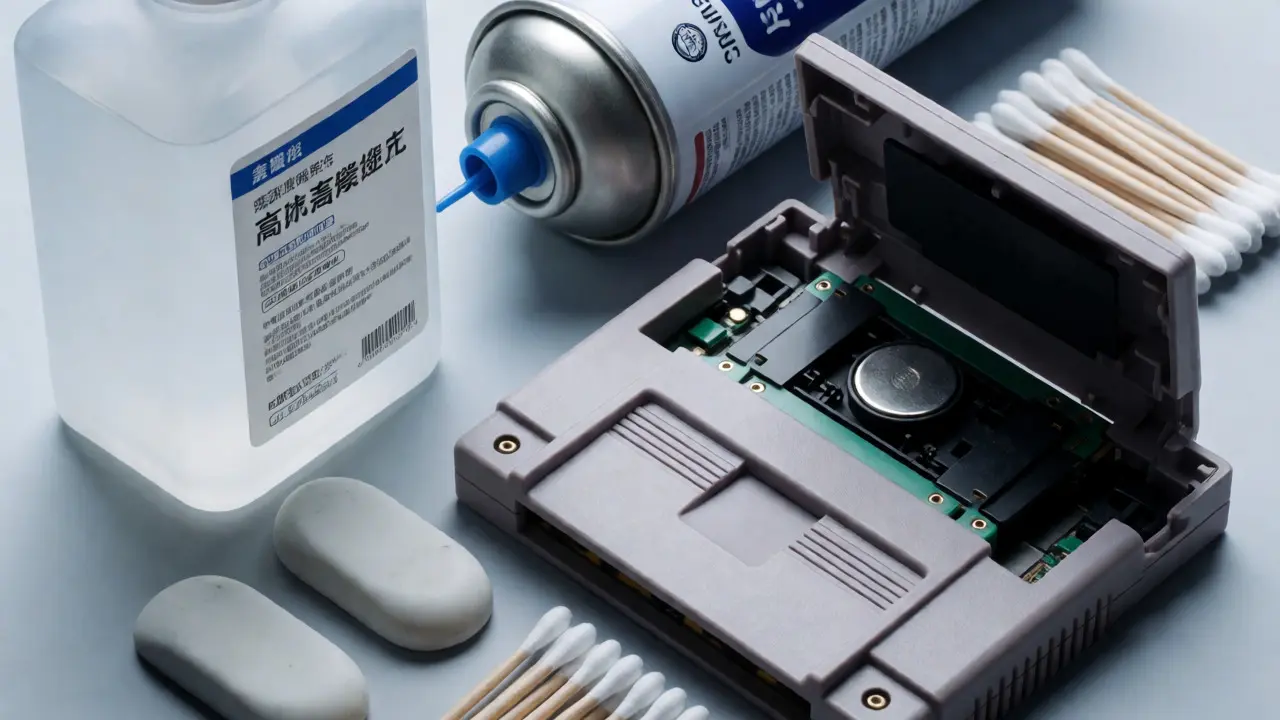
- Isopropyl Alcohol (90%+): The gold standard. Lower percentages contain water, which causes rust on metal contacts.
- Cotton Swabs: Use high-quality, non-shedding swabs. Cheap ones leave fibers behind.
- Compressed Air: For blowing out dust from the shell crevices before wet cleaning.
- Erasers: A soft white vinyl eraser is safe for external shell scuffs but dangerous if used aggressively on contacts.
- Contact Cleaner: Specifically designed for electronics (like DeoxIT), not WD-40.
Why Water and Soap Are Your Enemies
Let’s bust a myth right now. Do not take your Nintendo Entertainment System (NES) cartridge to the kitchen sink. While the outer plastic shell might survive a gentle wash, the interior is a different story. Inside every cartridge is a Printed Circuit Board (PCB). When water seeps into the seams-which it will, because old plastic shrinks and cracks-it reaches the solder joints and the edge connector.
Water leaves minerals behind. These minerals create conductive paths where there should be insulation, leading to short circuits. Worse, moisture reacts with the copper alloy in the edge connector. Over time, this creates green or blue corrosion (verdigris). Once that corrosion sets in, simply wiping it won’t fix the electrical connection. You need a solvent that evaporates completely and quickly. That is why isopropyl alcohol is the only liquid you should trust near open electronics. It displaces water and dries instantly, leaving no residue.
The Step-by-Step Internal Cleaning Process
Most cleaning failures happen because people skip the prep work. Here is the professional workflow for opening and cleaning a standard NES or SNES cartridge.
- External Dusting: Before you even touch the screws, use compressed air to blow out the top seam and the label area. You don’t want grit falling inside when you crack it open.
- Opening the Case: Most Nintendo cartridges use tri-wing screws. You need a specific Y-driver. Phillips heads are common on Sega Genesis and Atari carts. Turn the screws slowly; stripping them makes the cart unopenable.
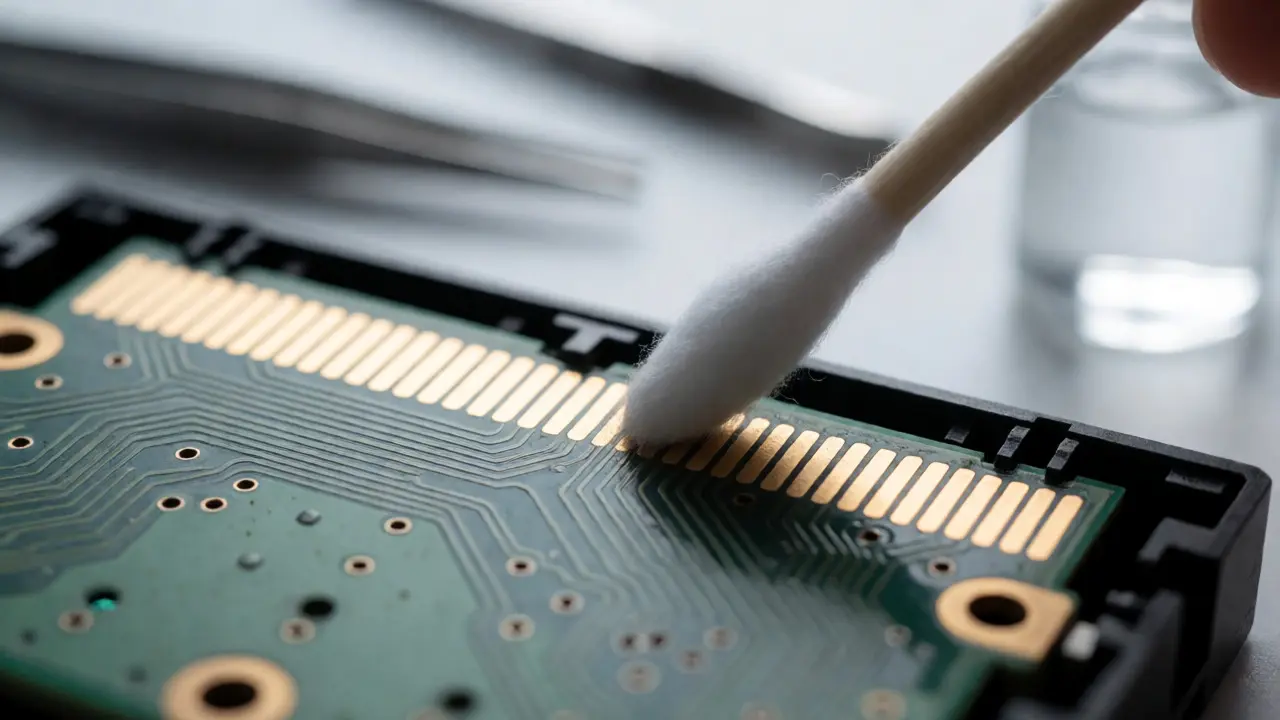
- Handling the PCB: Hold the board by its edges. Never touch the gold-plated contacts with bare fingers. The oils from your skin attract dust and can eventually cause tarnish.
- The Wipe Down: Dip a cotton swab in 90%+ isopropyl alcohol. Squeeze out the excess-you want damp, not dripping. Gently wipe the row of gold contacts. Apply light pressure. If you see black grime coming off, keep going until the swab comes away clean.
- Drying Time: Let the board sit for at least 10 minutes. Even though alcohol evaporates fast, trapped moisture in tight spaces needs time to escape.
What about those stubborn spots? If you have heavy oxidation, do not scrape it with a knife. Scoring the plating exposes the base metal underneath, which oxidizes faster than the gold did. Instead, let the alcohol soak the spot for a minute, then try again. Patience beats force every time.
Battery Backups: The Fragile Heartbeat
If you are cleaning a Game Boy Advance or a Super Nintendo game like The Legend of Zelda: Link’s Awakening, you are likely dealing with a save battery. This small coin-cell battery (usually CR2032 or similar) powers the RAM chip so your save file survives when the power is off. These batteries typically last 10-20 years. Many originals are dying right now.
Here is the critical rule: Never remove the original battery unless you are ready to replace it immediately. If you pull it out, you lose your save data forever. Also, check for leakage. Old alkaline batteries leak potassium hydroxide, a caustic substance that eats through circuit traces. If you see white or crusty buildup around the battery holder, neutralize it with a mix of distilled water and vinegar (applied carefully with a toothbrush), then dry thoroughly. If the traces are eaten through, no amount of cleaning will save the game; it needs microsoldering repair.
Shell Restoration: Cosmetic vs. Structural
A clean internal board doesn’t matter if the outside looks like it survived a war. Restoring the plastic shell is purely aesthetic, but it boosts resale value significantly. However, not all plastics age the same way. ABS plastic, commonly used in NES and SNES cases, yellows over time due to UV exposure. This isn’t dirt; it’s a chemical change in the flame retardants within the plastic.
| Agent | Best For | Risk Level | Notes |
|---|---|---|---|
| Isopropyl Alcohol | Sticky residue, general grime | Low | Safe for almost all plastics. Avoid prolonged soaking on labels. |
| Magic Eraser (Melamine Foam) | Scuffs and yellowing | Medium | Acts like fine sandpaper. Can dull glossy finishes. Test hidden areas first. |
| WD-40 | Sticker removal | High | Leaves oily residue that attracts dust. Not recommended for final finish. |
| Retr0bright Solution | UV Yellowing | Medium | Requires hydrogen peroxide and sunlight. Can weaken plastic if left too long. |
For simple dirt, a microfiber cloth slightly dampened with water is usually enough. If there are adhesive residues from price tags, use a tiny bit of isopropyl alcohol on a cloth, not directly on the case. Never submerge the entire shell in water if it has a paper label glued to it. Paper absorbs water, bubbles, and peels off. If the label is already loose, glue it back down with acid-free archival glue after cleaning, not during.
Platform-Specific Pitfalls
Not all cartridges are created equal. The method above works for Nintendo, but other systems have quirks.
Sega Genesis/Mega Drive: These carts often have a distinct smell-a musty odor caused by degrading foam pads inside the case. This foam crumbles into dust that coats the PCB. You must vacuum this dust out before applying any liquid. If you mix alcohol with that foam dust, you get a sticky paste that is hard to remove.
Atari 2600: The connectors on Atari carts are robust but prone to deep oxidation. Because the PCBs are simpler, you can be slightly more aggressive with cleaning, but watch out for brittle plastic. Atari cases from the late 70s are notoriously brittle. One slip of the screwdriver can crack the casing beyond repair.
Pokémon Cards/Carts: Game Boy Color and Advance Pokémon games often have multi-layer PCBs. Be careful near the edges where layers connect. Excessive alcohol pressure can seep between layers and delaminate the board if the glue was poor quality originally.
When to Stop Cleaning and Start Repairing
Sometimes, cleaning isn’t the answer. If you’ve cleaned the contacts, replaced the battery, and the game still won’t boot, look at the physical damage. Bent pins on the console side are a common culprit. Check your console’s connector first. If the pins are straight and clean, inspect the cartridge’s solder joints. Cold solder joints (dull, grainy connections) can crack over time due to thermal expansion. Re-flowing these requires a soldering iron and skill. Don’t attempt this if you’ve never held an iron before; one mistake can bridge two pins and fry the chip.
Also, consider the cost-benefit analysis. If you have a generic, low-value game (like a Tetris clone) that costs $2 on eBay, spending an hour cleaning it might not be worth it. But for rare titles like EarthBound or Panzer Dragoon Saga, proper preservation is essential to maintaining their market value. In the collectibles world, condition is everything. A dirty cart tells a buyer you didn’t care; a clean, well-preserved cart tells them you respected the artifact.
Frequently Asked Questions
Can I use hand sanitizer to clean my game cartridges?
No. Hand sanitizer contains moisturizers, fragrances, and lower alcohol concentrations (usually 60-70%). The additives leave a sticky film on the contacts that attracts dust and insulates the electrical connection, causing read errors later. Stick to pure isopropyl alcohol.
How do I fix a bent pin on my console connector?
Use a pair of needle-nose pliers or a dental pick. With the console unplugged, gently pry the bent pin back into alignment. Work slowly to avoid snapping it. If the pin snaps off, you may need to solder a new piece of wire or replace the entire connector port, which is a job for a technician.
Will cleaning reduce the value of my vintage game?
Proper cleaning increases value. However, removing the original sticker from the back of the cartridge or washing the box with soap can decrease value. Keep the cleaning focused on the functional parts (contacts) and the exterior shell, avoiding invasive alterations to packaging materials.
Why does my game still blink after cleaning?
If cleaning didn't work, the issue might be the save battery (if applicable), a cracked solder joint on the PCB, or a faulty lockout chip in the console. Try testing the cartridge in another known-good console to isolate the problem.
Is it safe to use a Q-tip with acetone?
Acetone dissolves many plastics, including polystyrene and ABS. Using acetone on a cartridge shell can melt the surface, creating a cloudy or pitted appearance. It is generally too harsh for vintage gaming plastics. Isopropyl alcohol is much safer.