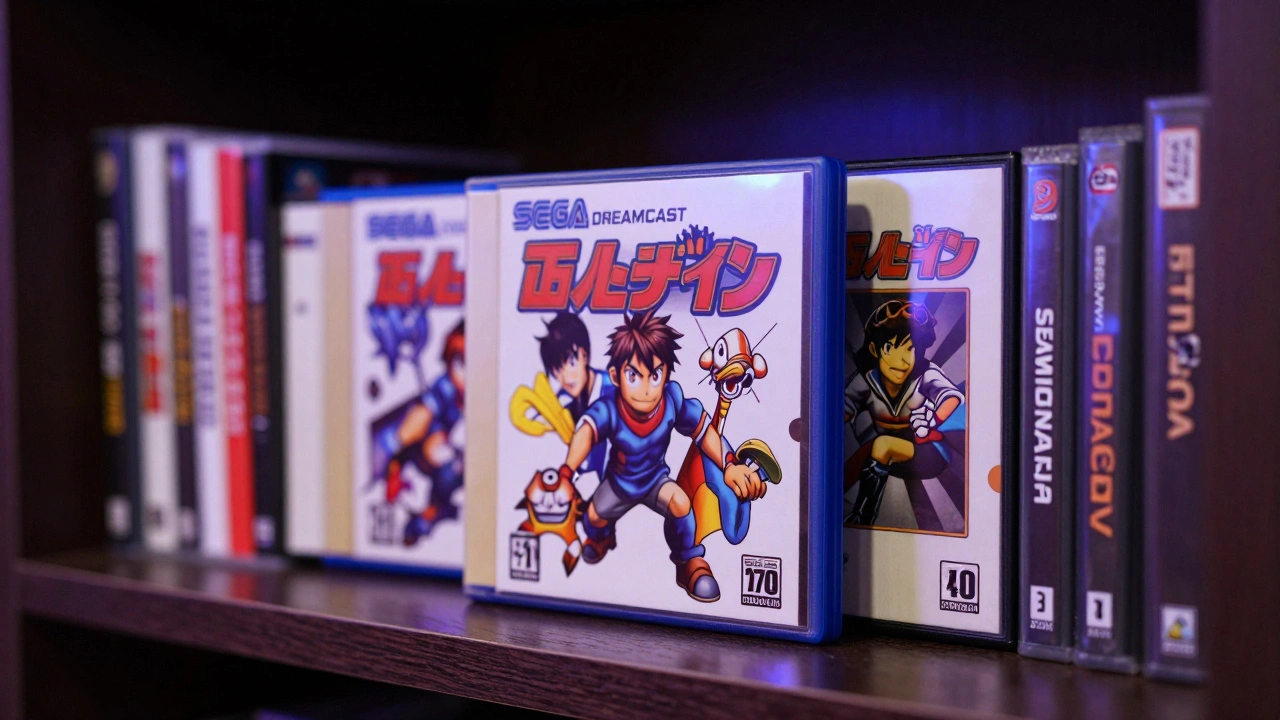
The Sega Dreamcast is a strange beast in the gaming world. Launched in 1999, it was a commercial disaster that failed to stop the PlayStation 2's momentum, but that failure is exactly why it's a goldmine for collectors today. Whether you're hunting for a rare Japanese import or trying to figure out if your console is a common model or a hidden gem, the market has shifted from "cheap bargain bin" to "high-stakes investment." To build a serious collection, you need to know where the actual value lies and how to stop your discs from rotting.
The Hunt for Rare Dreamcast Games
If you're starting a collection, you'll quickly realize that not all Sega Dreamcast games are created equal. While common titles are affordable, the "white whales" of the platform have seen massive price jumps. Take Cannon Spike, for example. Back in 2018, it was hovering between $80 and $190. Fast forward a few years, and the price has nearly doubled. This isn't just nostalgia; it's a shrinking supply meeting a growing demand from a generation that missed out the first time.
If you want the top-tier rarity picks, you have to look toward the Japanese imports. Sega Tetris (JP import) and Bomber Hehhe (JP import) are legendary among collectors for their scarcity. Even titles like Tech Romancer, which exists across multiple regions, remain high-value targets. When buying these, always check if the game is "Complete in Box" (CIB). A loose disc is fine for playing, but for collecting, the manual and the original case can double or triple the value.
| Game Title | Region | Rarity Status | Value Trend |
|---|---|---|---|
| Sega Tetris | Japan (Import) | Ultra Rare | Increasing |
| Bomber Hehhe | Japan (Import) | Ultra Rare | Increasing |
| Tech Romancer | Global | High | Stable/High |
| Cannon Spike | Global | High | Rapidly Rising |
Hardware Variants and Limited Editions
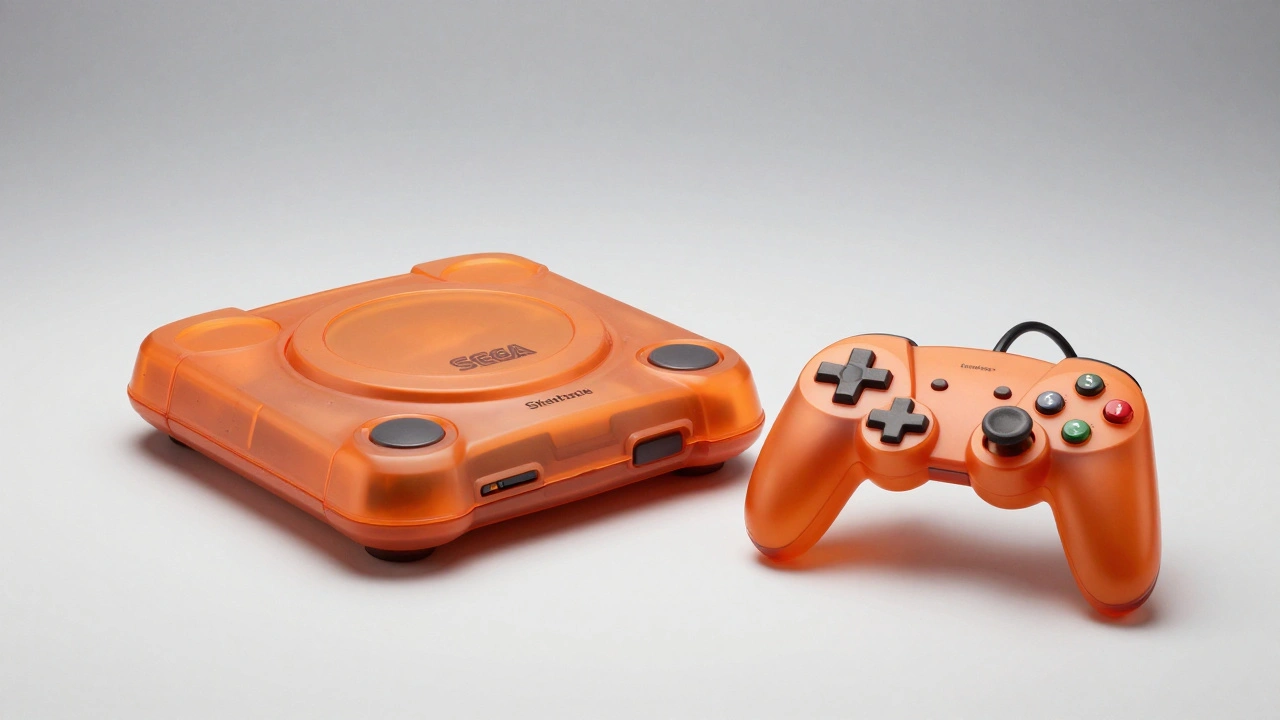
The console itself is an entity of its own. Most people remember the standard white box, but Sega released a staggering number of variants. There are roughly 15 documented limited edition hardware variants and dozens of regional versions. For instance, Japan saw 13 different NTSC-J versions, while North America and Canada had 23 NTSC-U/C versions.
One of the most iconic early limited runs was the Sonic Adventure Limited Edition in Japan, which featured a "Skeleton Orange" controller. If you find a Dreamcast with a translucent colored shell, you're likely looking at a limited run. Other rare finds include the Biohazard: Code Veronica and Biohazard S.T.A.R.S. editions, as well as the quirky Christmas-themed Seaman variant.
For the truly obsessive, there are "misprint" variations. These are consoles with slight errors on the back label. Because there is so little market data on these, pricing them is a guessing game. Most aren't even listed on eBay because the owners know they have a unique piece. If you're hunting for these, your best bet is spending time on community hubs like Dreamcast-Talk.com, where enthusiasts document every single screw and plastic mold change.
GD-ROM Care and Disc Preservation
The Dreamcast uses a proprietary format called GD-ROM (Giga Disk ROM). These hold more data than a standard CD, but they aren't invincible. The biggest enemy of any GD-ROM is "disc rot"-a chemical breakdown of the reflective layer that leads to read errors and game crashes.
To keep your games playable, follow these rules of thumb:
- Avoid direct sunlight: UV rays accelerate the degradation of the plastic and the reflective layer. Store your games in a cool, dark place.
- Control humidity: Extreme moisture or bone-dry air can cause the layers of the disc to separate. A stable, climate-controlled room is ideal.
- Handle by the edges: Fingerprints aren't just ugly; the oils from your skin can attract dust and create micro-scratches that the Dreamcast's laser struggles to read.
- Use quality cases: If you have loose discs, don't just throw them in a plastic sleeve. Use sturdy, archival-grade cases that prevent the discs from sliding around.
If you notice tiny pinholes when holding a disc up to the light, that's a sign of oxidation. Unfortunately, once disc rot starts, you can't "fix" it. The only solution is to find a replacement disc or use a modded console that can run backups from an SD card.
The Modern Market: Limited Run Games and Trading Cards
Collecting isn't just about old hardware anymore; new products are entering the scene. Limited Run Games recently released official Sega Dreamcast Trading Cards. However, these have sparked some controversy in the community. At $124.99 for a booster box, the cost per card is roughly $1.04-significantly higher than what you'd pay for a Pokémon booster pack.
The math for completing a set is brutal. A box contains 120 cards, but the odds of finishing a full set with just two boxes are about 1 in 218. This is largely due to the 48 rare insert cards. Because there's a lack of transparency regarding the exact "pull rates" (how often a rare card appears), these cards are more of a gamble than a structured collection. If you're buying these, do it for the love of the art, not as a guaranteed financial investment.

Collector's Checklist: What to Verify Before Buying
Buying a Dreamcast on the secondary market can be risky. To avoid getting scammed or buying a "lemon," use this checklist:
- Region Compatibility: Is it NTSC-J, NTSC-U/C, or PAL? Remember, the Dreamcast is region-locked unless it's one of the rare region-free variants.
- Capacitor Health: Old consoles can suffer from leaking capacitors. Ask the seller if the console has been "re-capped" or if there's any discoloration on the motherboard.
- Controller Integrity: Check for "sticky" buttons. Dreamcast controllers are prone to wear and tear, and original replacements are becoming expensive.
- Disc Condition: Ask for photos of the bottom of the discs. Look for circular scratches or the dreaded "bronzing" (oxidation) around the edges.
- Authentication: For limited editions, verify the serial number or specific markings that distinguish a real limited run from a third-party repaint.
Is it worth buying Japanese import Dreamcast games?
Yes, especially for rarity. Many of the most valuable titles, like Sega Tetris and Bomber Hehhe, were only released in Japan. While some games have language barriers, many are arcade ports or puzzle games where English isn't strictly necessary. Just keep in mind you'll need a Japanese console or a region-modded one to play them.
What is a GD-ROM and why does it matter?
GD-ROM stands for Giga Disk ROM. It's a proprietary format developed by Sega that allows more data (about 1GB) than a standard CD-ROM. Because it's a unique format, you can't just burn these onto a standard CD-R. This makes preservation critical, as original discs are the only way to experience the games without hardware mods.
How can I tell if my Dreamcast is a limited edition?
Look for non-standard colors (like the Skeleton Orange), special branding on the case, or unique bundles that included special controllers. Check the consolevariations.com database to match your serial number or design with known limited runs.
Are Limited Run Games trading cards a good investment?
It's risky. With a high cost per card ($1.04) and very low odds of completing a set (1 in 218 for two boxes), these are high-variance collectibles. Unless you are a dedicated completionist or love the artwork, the financial ROI is uncertain due to the lack of clear rarity tiers.
Where is the best place to track Dreamcast game values?
For real-time market data, eBay "Sold" listings are the gold standard. For curated rarity guides, community resources like Racketboy and Lords of Gaming provide a better historical perspective on which games are actually rare versus just momentarily expensive.
Next Steps for New Collectors
If you're just getting started, don't rush into the $500+ games. Start by securing a clean, working console and a few "must-play" titles to get a feel for the hardware. Once you're comfortable, decide if you want to focus on a "complete set" of a specific region or hunt for those elusive limited edition variants. If you find a rare piece, your first priority should be preservation-get a high-quality case and a UV-protected shelf. Happy hunting!