
You know that sinking feeling when you pull a stack of video game boxes from the top of a pile and hear the faint crackle of plastic giving way? Or maybe you’ve seen those sad, warped cases where the spine has faded into oblivion because they were stacked like pancakes. It’s not just about looking tidy; it’s about preserving the value and integrity of your collection. Whether you’re holding onto rare PS1 gems or just trying to keep your Switch library accessible, how you store them matters more than you think.
The debate between vertical storage and horizontal storage isn’t new, but the stakes have changed. Modern cases are thinner, spines are printed differently, and space in our homes is at a premium. So, which method actually wins? Let’s break down the physics, the aesthetics, and the practical reality of keeping your games safe.
Why Vertical Storage Is the Gold Standard
If you ask any serious collector or librarian, they’ll tell you: stand them up. Vertical storage involves placing game cases upright on a shelf, similar to books in a library. This is generally considered the safest method for long-term preservation. Why? Because gravity works in your favor here. When a case stands upright, the weight of the plastic is distributed evenly along the spine and the bottom edge. There’s no lateral pressure crushing the sides together, which means less stress on the hinge mechanisms.
Think about the last time you tried to pull a book out of a tightly packed shelf. It slides out smoothly. Now imagine pulling one out from the middle of a horizontal stack. You have to lift the entire column above it, risking a collapse that could scratch multiple discs or crack cases. Vertical storage eliminates this "Jenga effect." It also makes browsing infinitely easier. You can see the titles on the spines at a glance without having to dig through piles. For anyone with more than fifty games, this accessibility alone is worth the switch.
| Feature | Vertical Storage | Horizontal Storage |
|---|---|---|
| Spine Pressure | Minimal (gravity neutral) | High (stack weight) |
| Hinge Stress | Low | Moderate to High |
| Dust Accumulation | Top surface only | All exposed surfaces |
| Accessibility | High (spine visible) | Low (requires unstacking) |
The Hidden Dangers of Horizontal Stacking
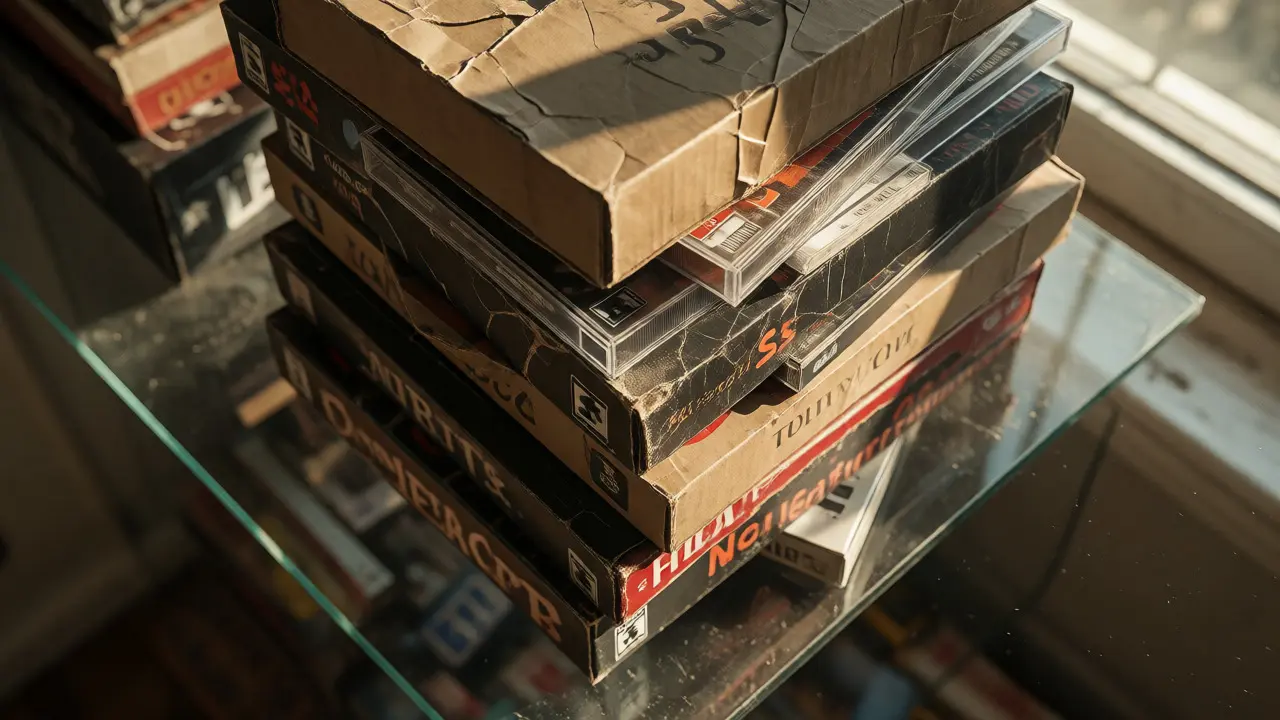
Don’t get me wrong-horizontal stacking has its place. If you’re moving house or storing seasonal collections in a basement, laying them flat is often necessary. But as a primary display method? It’s risky. The biggest enemy of horizontally stored games is compression. Over time, the weight of the stack presses down on the cases below. This doesn’t just crush the plastic; it can warp the cardboard inserts inside, causing them to detach or crease.
Then there’s the issue of moisture and dust. In a vertical setup, dust settles on the top edge of the case. In a horizontal stack, dust settles on every exposed face. If you live in a humid area like Portland, Oregon, where I’m writing this, humidity can seep into the gaps between stacked cases. Trapped moisture leads to mold on paper manuals and fogging on disc surfaces. When you finally separate the stack, you might find that the bottom cases have stuck together slightly due to static or mildew residue.
Also, consider the aesthetic toll. Spines fade faster when exposed to light. If you stack games horizontally near a window, the top layers get hit directly. But if you stack them vertically, you can control the exposure by angling the shelf or using UV-filtering glass. Horizontal stacks often end up looking messy within weeks unless you’re incredibly disciplined about alignment. One shifted case throws off the whole tower.
When Horizontal Storage Actually Makes Sense
So, should you throw out all your flat shelves? Not necessarily. There are specific scenarios where horizontal storage is superior. First, limited wall space. If you live in a small apartment and don’t have room for tall bookcases, floating shelves that hold games flat can save precious square footage. Second, heavy collections. Some older consoles, like the Sega Saturn or original Xbox, came with thick, heavy cases. Stacking these vertically requires deep shelves and sturdy brackets. Laying them flat distributes the weight across the entire base of the shelf, reducing the risk of sagging shelves over time.
Another valid use case is temporary organization. Maybe you’re sorting through a bulk buy from a garage sale. Piling them horizontally lets you quickly flip through and categorize them before deciding on a permanent home. It’s also great for displaying special editions with large outer sleeves or steelbooks that look better lying flat under a spotlight. Just remember: if you go horizontal, limit the stack height. Three to five cases high is usually the sweet spot before stability becomes an issue.
Material Matters: Plastic vs. Cardboard
Your choice of orientation should also depend on what kind of packaging you’re dealing with. Plastic jewel cases, common for CDs and DVDs, are brittle. They crack easily under lateral pressure. Vertical storage is almost mandatory for these to prevent hinge failure. However, modern console games often come in slim cases or even digital-only downloads with physical collectible boxes made of cardboard.
Cardboard boxes behave differently. They are susceptible to bending. If you store a cardboard collector’s edition vertically, ensure the shelf is snug enough to support the sides so the box doesn’t lean and crease. If you store it horizontally, make sure nothing heavy rests on top, or the lid will dent. Steelbooks, which are metal-backed cases, are surprisingly durable but prone to scratching. Vertical storage minimizes contact points, reducing the chance of scuffs between adjacent cases. In horizontal stacks, the metal edges rub against each other, leading to paint chipping over time.

Practical Tips for Optimal Organization
Ready to reorganize? Here’s how to do it right, regardless of your chosen method.
- Use Bookends: For vertical storage, weighted bookends are non-negotiable. They keep the rows straight and prevent the ends from bowing outward. Look for ones with rubber feet to avoid scratching your shelves.
- Control Humidity: Keep your collection in a climate-controlled environment. Aim for 40-50% relative humidity. Silica gel packs can help absorb excess moisture in enclosed cabinets.
- Avoid Direct Sunlight: UV rays bleach spines and degrade plastic. Position shelves away from windows or install UV-blocking film on nearby glass.
- Leave Breathing Room: Don’t pack cases too tightly. Leave a tiny gap between each case to allow air circulation and make removal easier without catching neighbors.
- Rotate Your Stack: If you must store horizontally, rotate the order every few months. Move the bottom cases to the top to distribute wear evenly.
One pro tip: if you’re mixing formats, group them by size. Mixing thin Switch cases with thick PS2 DVD cases creates uneven support. A row of uniform thickness provides consistent structural integrity. For mixed collections, consider using dividers or smaller bins to segregate sizes before placing them on the main shelf.
The Verdict: Which Should You Choose?
If you care about longevity and ease of access, go vertical. It’s the standard for libraries and museums for a reason. It protects hinges, preserves spines, and makes finding that one obscure RPG you wanted to replay ten minutes ago a breeze. Horizontal storage is a compromise-a space-saver or a temporary fix-that comes with risks of warping, dust buildup, and accidental damage.
But here’s the nuance: you don’t have to choose one exclusively. Use vertical for your active, frequently played collection. Reserve horizontal stacking for bulk archives, seasonal rotations, or items displayed purely for visual impact in a closed cabinet. By understanding the strengths and weaknesses of each, you can build a hybrid system that keeps your games safe and your living space functional.
Does storing video games vertically really prevent scratches?
Yes, primarily because it reduces friction between cases. In horizontal stacks, cases slide against each other when the stack shifts, causing micro-scratches on the plastic covers. Vertically, they remain stationary relative to one another if properly supported by bookends.
Can I store Nintendo Switch games horizontally?
You can, but it’s not ideal for long-term storage. Switch cases are thin and flexible. Horizontal stacking can cause them to bend or warp over time, especially if the stack is tall. Vertical storage with tight packing is recommended to maintain their shape.
How much weight can a shelf hold for horizontal game stacks?
It depends on the shelf material. Particleboard shelves may sag with more than 20-30 pounds of games. Solid wood or reinforced metal shelves can handle significantly more. Always check the manufacturer's load rating and avoid exceeding it to prevent catastrophic failure.
Is dust worse for vertical or horizontal storage?
Horizontal storage collects more dust overall because all faces are exposed. Vertical storage limits dust accumulation to the top edge and the front/back if open-faced. Using a closed cabinet mitigates this issue for both methods.
Should I remove manuals before storing?
No, keep them inside. Removing manuals increases the risk of losing them. However, if you notice ink transfer from manual pages to the plastic case, place a sheet of acid-free tissue paper between the manual and the case to prevent staining.