Remember when you could walk into a local thrift store and pick up a sealed copy of Super Mario Bros. for five bucks? That world is gone. If you’re holding onto old cartridges or disc-based titles from the NES through PS2 era, you’re sitting on assets that have behaved more like tech stocks than toys over the last five years. The period from 2021 to 2026 wasn’t just a boom; it was a fundamental restructuring of how we value physical media. Whether you’re looking to cash out, start a collection, or understand why your childhood stash is suddenly worth rent money, you need to look at the hard data behind the hype.
The Pandemic Hangover and the 2021 Spike
Let’s rewind to 2021. While the rest of the world was stuck indoors, nostalgia became a commodity. This wasn’t just about buying new consoles; people were digging through attics. The demand for Nintendo Entertainment System (NES) titles exploded because they were finite, recognizable, and culturally significant. Prices didn’t just tick up; they doubled and tripled in months. A loose Zelda II: The Adventure of Link that might have sold for $50 in 2019 was hitting $300 by late 2021.
Why did this happen? It wasn’t magic. It was supply shock meeting pent-up demand. During lockdowns, shipping slowed down, making international imports difficult. Meanwhile, auction houses like Heritage Auctions started reporting record-breaking sales for single lots. The average price for a graded Pokémon Red cartridge jumped nearly 40% in under six months. If you were watching eBay trends, you saw bidding wars for items that had sat unsold for years. This was the first major signal that video games had graduated from "kids' stuff" to legitimate collectible assets.
The Rise of Professional Grading Services
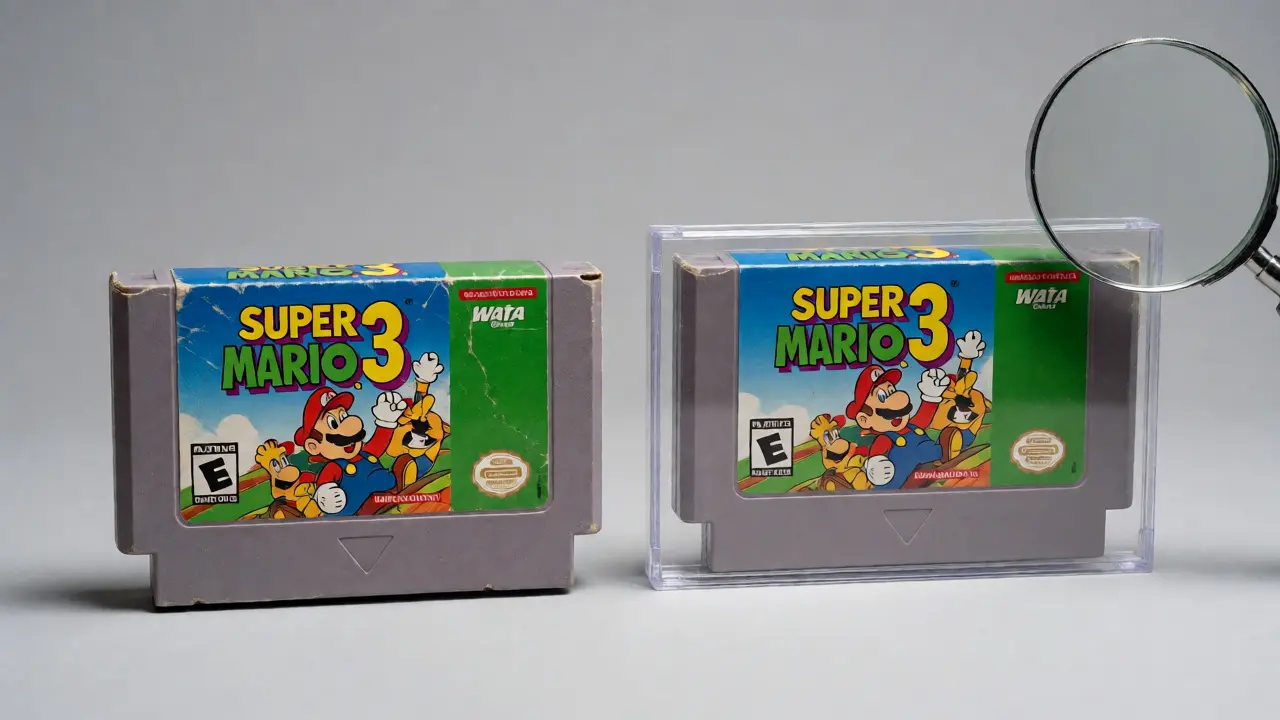
You can’t talk about price trends without talking about Wata Games. Before 2021, grading was niche. By 2023, it was standard practice for high-value items. Companies like Wata and VGA began certifying not just the game, but the manual and box condition with forensic-level detail. This created a new tier of pricing based purely on paper weight and ink vibrancy.
Here’s the reality: an ungraded loose cartridge and a Wata-graded 9.8 CIB (Complete In Box) version of the same game are different products entirely. In 2022, a sealed Sonic the Hedgehog for Genesis might sell for $100 raw. The same game, graded 9.8, could fetch $1,500. This spread widened significantly between 2021 and 2024. Investors realized that grading reduced risk. When you buy a graded item, you aren’t gambling on whether the previous owner stored it in a damp basement. You’re buying a certified asset. This trust factor drove premiums higher, creating a two-tier market where top-tier grades skyrocketed while lower-grade items stagnated.
Platform-Specific Volatility: Nintendo vs. Sony
Not all platforms moved at the same speed. Nintendo has always been the blue-chip stock of this market. Their IP-Mario, Zelda, Pokémon-is evergreen. From 2021 to 2026, Nintendo titles showed consistent year-over-year growth, rarely dipping more than 5-10% even during economic downturns. A sealed Super Metroid for SNES went from roughly $1,200 in early 2021 to over $2,500 by mid-2026.
Sony PlayStation titles, particularly from the original PlayStation and PS2 era, followed a different curve. They spiked later, around 2022-2023, as millennials who grew up with these consoles entered their peak earning years. However, the volume of production was much higher for PlayStation discs than for Nintendo cartridges. This means scarcity is harder to find. Common PS2 titles like Grand Theft Auto: San Andreas saw modest gains, maybe 20-30%, while rare regional exclusives like Castlevania: Lament of Innocence saw sharper spikes. The lesson here? Scarcity drives value, but brand loyalty sustains it.
| Game Title | Platform | Avg Price 2021 (CIB) | Avg Price 2026 (CIB) | Growth % |
|---|---|---|---|---|
| Super Mario Bros. 3 | NES | $180 | $450 | +150% |
| Chrono Trigger | SNES | $250 | $600 | +140% |
| Final Fantasy VII | PS1 | $120 | $350 | +191% |
| Halo: Combat Evolved | Xbox | $40 | $110 | +175% |
| EarthBound | SNES | $800 | $1,900 | +137% |
The Bubble Correction of 2024-2025
Every speculative market corrects itself. After the frenzy of 2021-2022, the market cooled off. Between 2024 and 2025, we saw a stabilization phase. Prices for common titles dropped 10-15%. Why? Because too many people tried to flip games for quick profit. eBay listings flooded the market as casual sellers dumped their collections. Buyers got pickier. They stopped paying premium prices for mediocre condition items.
This correction was healthy. It filtered out the flippers and left serious collectors. If you bought a generic Call of Duty title in 2022 hoping for a jackpot, you probably lost money. These games were mass-produced in the millions. But if you held onto a rare Japanese import or a limited-edition collector’s set, you likely stayed flat or gained slightly. The key takeaway from this period: rarity matters more than nostalgia. Everyone remembers playing Mario Kart 64, but few own a factory-sealed copy with intact shrink wrap.
Current Landscape in Late 2026
As we sit here in November 2026, the market has matured. It’s no longer about wild speculation. It’s about quality curation. High-end auctions still break records, but they require pristine examples. A 9.4 grade isn’t good enough anymore if a 9.8 exists. The gap between grades has widened. For example, a 9.0 graded Paper Mario for N64 might be worth $400, while a 9.8 could command $1,200.
We’re also seeing a rise in "digital-native" collecting. People who grew up with Xbox Live achievements and Steam libraries are now buying physical editions of modern games, hoping history repeats itself. Early signs suggest that limited-run Switch titles are already appreciating, though it’s too early to call them long-term winners. The smart move right now is diversification. Don’t put all your eggs in one platform basket. Mix Nintendo staples with high-demand PlayStation rarities and emerging PC boxed editions.
How to Evaluate Your Collection Today
If you’re wondering what to do with your shelf, start with an audit. Separate your items into three piles: loose, complete, and sealed. Loose copies of common games are barely worth shipping costs. Complete-in-box (CIB) items have steady value. Sealed items are the gold standard, but only if the shrink wrap is intact and original.
- Check for authenticity: Fake boxes and re-shrunk games are rampant. Learn to spot non-original shrink wrap-it often looks too glossy or has seams in the wrong places.
- Research recent sales: Don’t look at asking prices. Look at completed eBay auctions from the last 90 days. Asking prices are wishful thinking; sold prices are truth.
- Consider grading carefully: Only send items for grading if the potential value increase outweighs the cost (approx. $50-$100 per game plus shipping). If a game is worth $50 raw, don’t spend $100 grading it unless you expect it to hit $300+.
Storage matters too. Keep your collection away from direct sunlight and humidity. Yellowing plastic cases kill value faster than anything else. Use archival-safe sleeves for manuals and cards. Treat them like documents, not toys.
Future Outlook: Where Is the Market Going?
Will prices keep rising? Probably not at the same explosive rate. We’ve likely passed the peak hype cycle. Future growth will depend on demographic shifts. As Gen Z enters its prime spending years, they may drive interest in different eras-perhaps late PS3/Xbox 360 titles or early Wii games. The "retro" definition keeps moving forward.
Also, watch for corporate intervention. Nintendo and Sony occasionally release mini-consoles or remasters that flood the market with cheap alternatives, which can suppress original hardware prices. However, they rarely touch the software market directly. The scarcity of original pressings remains the strongest driver of value. Unless a company decides to reissue exact replicas in massive quantities, original prints remain finite resources.
For now, the market is stable. It’s less of a casino and more of a museum investment. If you love the games, keep them. If you want to invest, stick to the proven winners: iconic franchises, low print runs, and impeccable condition. The days of finding a fortune in a garage sale are mostly over, but building a valuable collection is still very possible if you’re strategic.
Are all old video games increasing in value?
No. Mass-produced titles from the PS2 and Xbox eras, such as EA Sports FIFA annual releases, generally hold little to no value. Value increases are concentrated in scarce titles, iconic franchises, and games with cultural significance. Always check completed sales data before assuming appreciation.
Is it worth grading my video games in 2026?
Grading is only worth it for high-value items. If a game sells for $50 ungraded, spending $75 to grade it usually doesn't make financial sense. Focus on games that raw sell for $100+ or rare titles where a high grade can multiply the value by 5x or 10x. Research specific comps for your title first.
What affects video game prices the most?
The primary factors are scarcity (print run size), condition (sealed vs. loose), and cultural popularity. Franchises like Zelda and Pokémon command premiums due to enduring fan bases. Regional exclusives (e.g., Japan-only releases) often have higher volatility and potential upside compared to global releases.
How do I store my collection to preserve value?
Store games upright in a cool, dry place away from direct sunlight. UV light causes yellowing and brittleness in plastic cases and cardboard boxes. Use acid-free sleeves for manuals and avoid stacking heavy items on top of boxes to prevent crushing. Humidity control is critical to prevent mold and label peeling.
Did the market crash after the 2021 spike?
It corrected rather than crashed. Between 2024 and 2025, prices for common items stabilized or dipped slightly as speculative buyers exited the market. High-quality, rare items maintained their value or continued slow growth. The market is now more rational, rewarding quality over mere nostalgia.