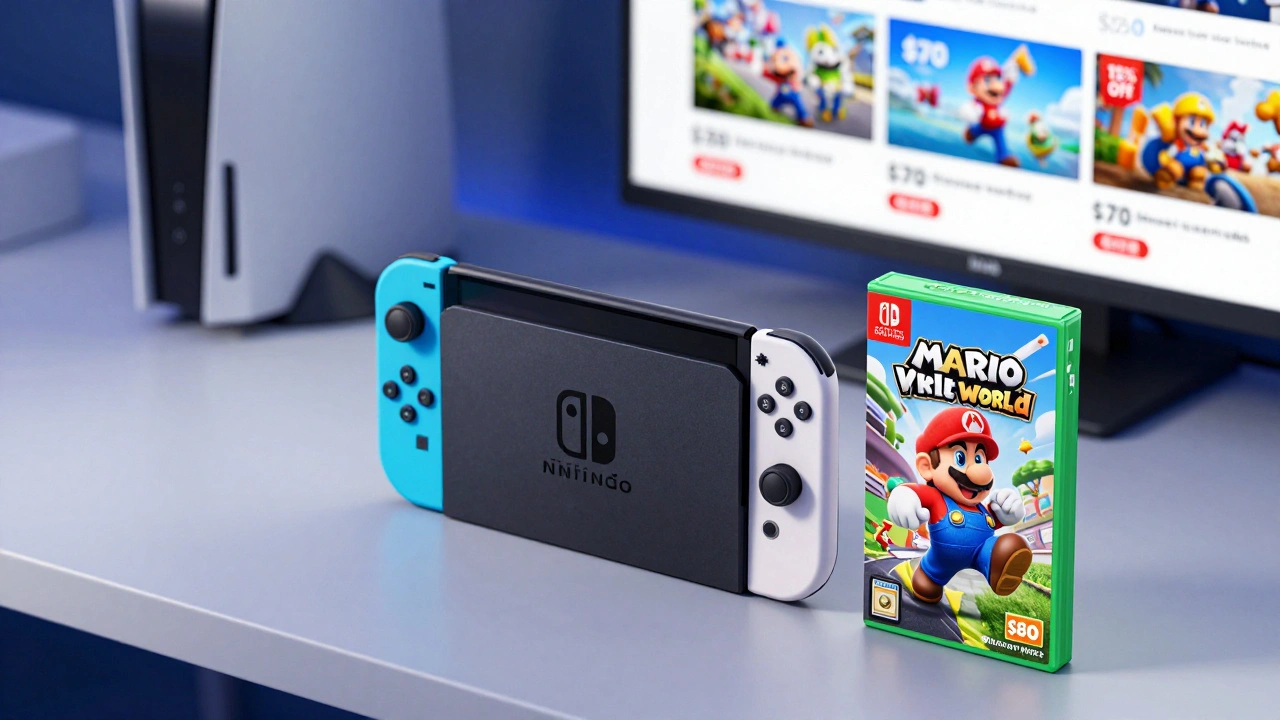
You pick up a new Nintendo Switch 2 is the next-generation home video game console from Nintendo, succeeding the Switch, and you see the price tag on a brand-new Mario Kart World is a major racing game title released for the Nintendo Switch 2 platform. It says $80. You check your PlayStation or Xbox store, and similar-looking titles are sitting at $70, often with a "15% off" badge already attached. You sigh, mutter about the "Nintendo Tax is a colloquial term used by gamers to describe the perceived premium pricing of Nintendo hardware and software compared to competitors," and put the card down. Or maybe you don't. Maybe you buy it anyway because you've been waiting five years for this specific karting experience.
This isn't just a feeling; it's a structural reality of the gaming industry. Nintendo games consistently hold their value better-and cost more upfront-than almost any other competitor. But why? Is it just corporate greed, or is there actual economic logic behind keeping those price tags high? Let's break down the mechanics of why your wallet takes a hit when you play Nintendo.
The Shift to Premium Pricing
Gone are the days when every major console game launched at $60. That era ended quietly, but Nintendo made sure everyone noticed its exit. With the launch of the Switch 2, Nintendo has formally moved its flagship first-party titles into a higher price bracket. We are seeing standard MSRPs (Manufacturer's Suggested Retail Prices) hit $70 and even $80 for top-tier releases.
Take Super Mario Party JNS 2E + JTV is a party game compilation released for the Nintendo Switch 2 as an example. Physical copies are launching at $80. Even slightly less hyped titles like Donkey Kong Bananza is an upcoming platformer game for the Nintendo Switch 2 are hitting stores at $70. This represents roughly a 33% increase over the previous generation's standard. Nintendo isn't hiding this shift. Their official communications explicitly state that pricing varies by title and format, acknowledging that they have reset the baseline for what consumers should expect to pay for premium experiences.
This isn't a temporary glitch in the matrix. Analysts point out that this is a deliberate architectural change. By setting $80 as the ceiling for physical releases, Nintendo is signaling that these games are durable goods, not disposable entertainment. They want you to view a Zelda or Mario game as something akin to a classic novel or a vinyl record-items meant to be kept, respected, and valued long after the initial hype fades.
The Digital vs. Physical Split
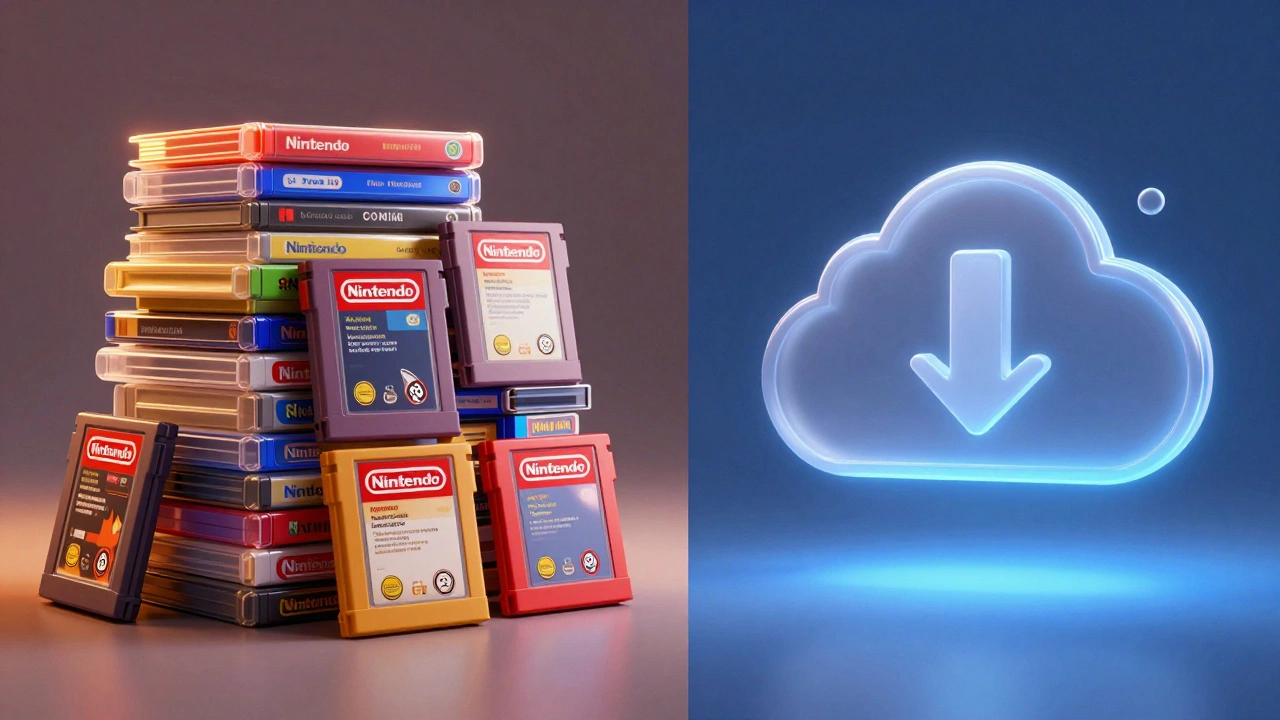
If you think buying digitally saves you money, you're partially right, but the gap is narrowing in a way that keeps overall spending high. Nintendo has introduced a distinct price tier between physical cartridges and digital downloads. For many Switch 2 titles, the physical version costs $10 more than the digital one. For instance, Yoshi and the Mysterious Book is a platformer game featuring Yoshi, available on Nintendo Switch 2 might list at $70 for the box and $60 for the download.
Nintendo justifies this split by citing production costs. Making plastic cases, printing manuals, manufacturing cartridges, and shipping heavy boxes to retail partners costs real money. Digital files do not have these logistics. However, the strategy goes deeper. It forces a choice based on consumer behavior rather than just convenience.
| Format | Typical MSRP Range | Primary Cost Driver | Resale Value |
|---|---|---|---|
| Physical Cartridge | $70 - $80 | Manufacturing, Shipping, Retail Margins | High (Can be sold/traded) |
| Digital Download | $60 - $70 | Licensing, Server Maintenance | None (Tied to account) |
Here’s the catch: Nintendo fans love physical media. Data suggests that when given the choice, Nintendo users buy physical copies at a ratio of roughly 2:1 compared to digital. Why? Because collectors love collecting, and parents prefer handing kids a cartridge rather than managing screen time via app stores. Because demand for physical is so high, Nintendo can charge a premium for it without losing sales. If they dropped physical prices to match digital, they’d lose revenue. If they raised digital prices to match physical, they’d anger the casual downloader. So they keep both high, just staggered.
The Power of Exclusivity
Let’s talk about leverage. Sony and Microsoft compete fiercely for your attention. They have massive libraries of third-party games-Call of Duty, Assassin’s Creed, FIFA-that appear on both platforms. To win you over, they often discount these games heavily or bundle them into subscription services like Xbox Game Pass is a monthly subscription service providing access to a library of video games for Xbox and PC or PlayStation Plus is a subscription service offering online multiplayer and free monthly games for PlayStation consoles.
Nintendo doesn’t play that game. Literally. If you want to play The Legend of Zelda is a iconic action-adventure video game series exclusive to Nintendo platforms or Pokémon is a multimedia franchise centered around creature collection, exclusive to Nintendo handhelds and consoles, you have no other option. You cannot buy them on Steam. You cannot find them on PS5. This creates what economists call "inelastic demand." When there is only one place to get something people desperately want, the seller has total control over the price.
This exclusivity allows Nintendo to maintain high prices because the competition isn't other publishers; the competition is *not playing*. And for millions of fans, not playing isn't an option. This unique position means Nintendo doesn't need to slash prices to move units. A $80 Zelda game will sell millions of copies simply because it exists, whereas a multi-platform shooter needs to be $40 to convince you it's worth picking up over three other similar options.
The "Evergreen" Strategy
Most AAA games follow a predictable lifecycle. They launch at full price, drop to 90% off within six months, and then disappear into the bargain bin. Nintendo operates differently. Former PR staffers have revealed that Nintendo leadership wants to "respect the value" of its software. Heavy discounting soon after launch undermines the perception of quality. If a game drops to $20 two weeks after release, early adopters feel cheated, and the brand feels cheap.
Instead, Nintendo treats its big hits as "evergreen" products. Think about how long Mario Kart 8 Deluxe is a highly successful racing game on the original Nintendo Switch stayed near full price. Years after release, it was still selling strongly at $59.99 or $69.99. On Switch 2, this pattern continues. The expectation is that these games will sell steadily for a decade, not spike and crash. This slow burn requires maintaining a high price floor. Discounts exist, yes, but they are modest and rare. You won't see a 50% off sale on a new mainline Mario game anytime soon.
Consumer Sentiment and the Future
So, do players care? Absolutely. The internet is filled with debates about whether Nintendo games are "worth" the premium. Forums buzz with frustration over the $80 price tag. Yet, despite the noise, sales figures tell a different story. People are still buying. Why? Because the alternative is paying $70 for a game that feels generic, or paying $70 plus a $17/month subscription fee to access a rotating library of titles you might never finish.
Nintendo offers tangible ownership and unique experiences. For families, the family-friendly nature of these games adds a layer of safety and accessibility that justifies the extra cost. For adults, the nostalgia factor is powerful. You aren't just buying code; you're buying a connection to childhood memories that no other company can replicate.
Looking ahead, analysts believe this trend is permanent. With inflation rising and development costs increasing, the $80 mark for physical premieres may become the new normal. Rumors of $90 games circulate, though they remain unconfirmed. What is confirmed is that Nintendo has successfully retrained consumers to accept higher prices for premium content. The "Nintendo Tax" isn't going away; it's just becoming part of the ecosystem's DNA.
Tips for Managing Your Gaming Budget
If you want to enjoy Nintendo's ecosystem without breaking the bank, here are some practical strategies:
- Wait for the "Gold" Label: While first-party games rarely drop significantly, older titles eventually get marked down. Keep an eye on seasonal sales for back-catalog items.
- Consider Used Physical Copies: Since physical games hold value, the secondary market is robust. Buying a used copy from a friend or a local shop can save you $10-$20, especially if you resell it later.
- Stick to Digital for Non-Collectibles: If you don't care about shelf display or resale, always choose the digital version. The $10 savings adds up quickly across a year of gaming.
- Borrow from Friends: Nintendo games have incredible replay value, but they also have high rental value. Rotate games with friends who own the same console.
What exactly is the "Nintendo Tax"?
The "Nintendo Tax" is a slang term used by gamers to describe the phenomenon where Nintendo hardware and software are priced higher than comparable products from competitors like Sony, Microsoft, or PC gaming. It refers to the premium consumers pay for the privilege of accessing Nintendo's exclusive franchises and ecosystem.
Will Nintendo games ever go on deep sale?
First-party Nintendo titles rarely go on deep sale. Unlike competitors who discount games heavily within months, Nintendo maintains high prices to preserve the perceived value of its brands. Significant discounts usually only happen years after release, or for older, less popular titles.
Is it cheaper to buy physical or digital Nintendo games?
Initially, digital versions are often $10 cheaper than physical counterparts on the Switch 2. However, physical games can be resold or traded, potentially offsetting the higher upfront cost. Digital games are tied permanently to your account and have no resale value.
Why are Nintendo Switch 2 games more expensive than Switch games?
Nintendo has raised its base MSRP for major titles to reflect increased development costs, inflation, and the premium positioning of its next-gen hardware. Standard prices have moved from $60 to $70-$80 for physical releases, marking a structural shift in the company's pricing strategy.
Do Nintendo games hold their value better than others?
Yes. Due to high demand, limited supply of certain editions, and the lack of aggressive discounting, Nintendo games retain a higher percentage of their original retail price on the secondary market compared to most PlayStation or Xbox titles.