Walking into a local thrift store or browsing eBay for Wii games can feel like a gamble. On one hand, you might stumble upon a sealed copy of a niche title that’s worth triple its shelf price. On the other, you’re likely holding a $2 game that was printed in millions and has zero resale value. The line between a hidden gem and digital landfill is thin, and knowing where to draw it saves you money and storage space.
The Wii U is a hybrid console released by Nintendo in 2012 that served as both a standalone system and an upscaler for Wii games. Because it shares backward compatibility with its predecessor, the collecting landscape for both systems overlaps significantly. However, their production runs, marketing strategies, and third-party support differ wildly, creating distinct rules for what constitutes a "rarity" on each platform.
Understanding the Shovelware Flood
To sort through the noise, you first need to understand why so many low-quality titles exist on these platforms. The Wii launched in 2006 with a unique motion-control interface. Suddenly, any developer could make a game without needing complex physics engines or high-end graphics. This lowered barrier to entry led to an explosion of third-party titles, many of which were rushed to market to capitalize on the novelty.
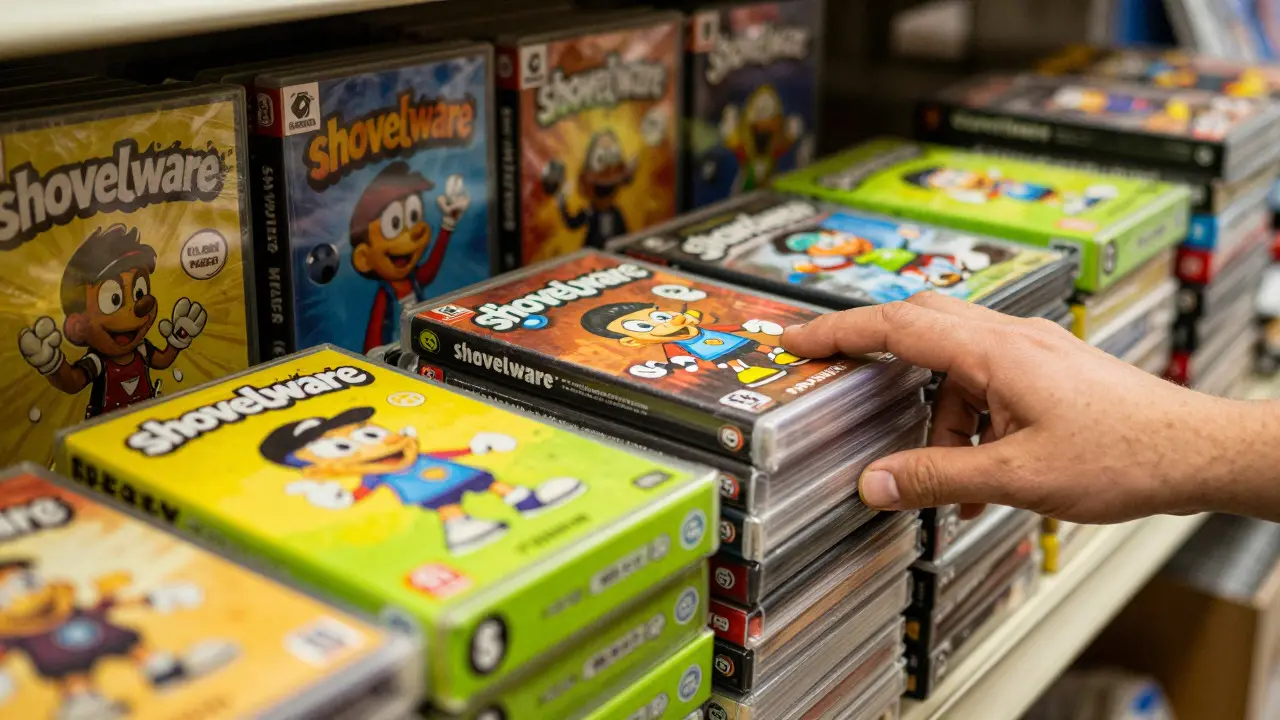
Shovelware is low-quality video software produced quickly and cheaply, often with minimal testing and poor gameplay mechanics. On the Wii, this manifested as endless variations of sports games, party games, and simple action titles from publishers like D3 Publisher, Majesco, and Pipeworks. These companies released dozens of titles per year, many of which sold under 50,000 copies. If a game has a generic box art featuring cartoonish characters and a title that sounds like a verb (e.g., "Bounce!", "Smash!", "Jump!"), it is almost certainly shovelware.
The Wii U saw a similar trend but with a twist. Since the Wii U GamePad allowed for asymmetric multiplayer, developers created countless party games that relied heavily on the controller rather than skill. Titles from Nintendo's own second-tier studios, such as Retro Studios (in its later years) and Epic Games (for specific ports), sometimes fell into this category if they lacked critical acclaim. However, true shovelware on Wii U is rarer because the development costs were higher due to the more powerful hardware.
Identifying Late-Print Rarities
While shovelware is common, late-print rarities are the holy grail for collectors. A "late print" refers to a version of a game released after the initial launch, often with updated packaging, region-specific features, or bundled content. These versions are typically produced in smaller quantities because the game has already established its sales base.
On the Wii, look for games released in 2010-2012. By then, the console's lifecycle was winding down, and Nintendo reduced production runs for most third-party titles. For example, the late print of Super Mario Galaxy 2 included a different manual and sometimes a slightly altered box design compared to the 2010 launch version. While not incredibly rare, these late prints command a premium among completionists who want the "final" version of a title.
The Wii U offers more significant opportunities for rarity hunting. Because the console struggled commercially, many third-party titles received only one or two print runs. If a game was released in 2014 or 2015, especially if it wasn't a major franchise title, the total number of copies ever printed may be under 100,000. Sealed copies of these titles can sell for 2x to 5x their original retail price today. Look for specific indicators:
- Region Codes: European and Japanese releases are often scarcer than North American ones. A PAL version of a niche indie game is far harder to find than its NTSC-U counterpart.
- Bundles: Limited edition bundles, such as the Mario Kart 8 Gold Edition or the Zelda: Twilight Princess Collector's Edition, have fixed production numbers. Once sold out, they don't come back.
- Manual Variations: Some late prints omitted the instruction manual to save costs. Conversely, some early prints included extra stickers or posters. Check the contents list carefully.
Practical Sorting Techniques for Your Collection
Once you've acquired a stack of used games, how do you efficiently separate the wheat from the chaff? Here’s a practical workflow used by experienced collectors in cities like Portland, Oregon, where vintage gaming shops thrive.
- Check the Barcode: Every game case has a barcode. Scan it using a free app like "Game Database" or "Nintendo Game Database." This will instantly tell you the release date, publisher, and average resale value. If the app shows no data or a value under $5, it’s likely shovelware or a mass-produced title.
- Inspect the Box Art: Shovelware often uses clip-art style graphics or stock photos. Rare or high-value titles usually feature custom, high-quality artwork. If the box looks like it was made in Microsoft Word, put it back.
- Look for Stickers: In the US, games released after 2009 often had ESRB rating stickers on the front. Early Wii games didn't. A lack of a sticker doesn't mean it's rare, but a mismatched sticker (e.g., a "T" rating on a game rated "E") indicates a re-release or import, which can affect value.
- Verify the Disc: Open the case (if buying used). Check the disc for scratches. More importantly, look at the text on the disc itself. Some late prints have different copyright dates or revision numbers. For instance, a disc marked "Rev B" might be a later print than "Rev A," which could be more valuable if the game is scarce.
Comparing Value: Wii vs. Wii U
The market values for these two consoles differ significantly. The Wii is older, meaning its supply chain has stabilized. Most common titles are cheap, but truly rare items (like the Wii Sports Resort bundle with the exclusive remote) hold steady value. The Wii U, being newer and having failed commercially, has a more volatile market. Niche titles that were ignored in 2014 are now becoming collector's items simply because there aren't many left.
| Factor | Wii | Wii U |
|---|---|---|
| Average Price of Common Games | $2 - $5 | $5 - $10 |
| Rarity of Third-Party Titles | Low (High production volumes) | Medium-High (Lower production volumes) |
| Shovelware Prevalence | Very High | Moderate |
| Best Era for Rarity Hunting | 2010 - 2012 | 2014 - 2017 |
| Key Indicator of Value | Sealed condition, First Print | Region exclusives, Bundle contents |
Pitfalls to Avoid When Buying Used
Even with the best sorting techniques, you can still get burned. One common trap is the "fake sealed" game. Sellers often buy a used game, clean it up, and reseal it with new plastic wrap. To spot this, check the corners of the cardboard case. Genuine factory seals have uniform tension; reseals often have loose corners or air bubbles. Another pitfall is assuming that a "Collector's Edition" is always valuable. Many CE boxes contain standard discs and manuals with minor cosmetic differences. Verify exactly what's inside before paying a premium.
Also, be wary of region mismatches. A Japanese Wii U game will not work on a North American console unless it's a specific dual-region title. Always confirm the region code (NTSC-U, PAL, or NTSC-J) before purchasing. This is especially important for indie games, which were often released in Japan first and months later in the West, making the Japanese version potentially more sought-after by purists.
Frequently Asked Questions
Are all Wii games worth collecting?
No. Only about 10-15% of Wii games have significant collectible value beyond their playability. Focus on first-party Nintendo titles, limited bundles, and late-print editions of popular games. Mass-produced third-party titles generally lose value over time.
How do I identify a first-print Wii U game?
First-print games usually have the earliest possible release date on the box and disc. They may also include promotional materials like stickers or posters that were discontinued in later prints. Check online databases for known first-print characteristics of specific titles.
Is it better to buy sealed or used games for collecting?
Sealed games hold value better, but only if the seal is genuine. For most casual collectors, a used game in "Mint" condition with all accessories is sufficient. Sealed copies are primarily for investors or completionists aiming for perfect scores on grading sites.
What is the most expensive Wii U game ever sold?
Prices fluctuate, but sealed copies of the Mario Kart 8 Gold Edition and the Zelda: Breath of the Wild Launch Edition have fetched hundreds of dollars. Niche Japanese-exclusive titles can also command high prices due to scarcity.
Do Wii U games work on the original Wii?
Yes, most Wii U games are backward compatible with the original Wii console. However, the reverse is not true; Wii games do not work on the Wii U without the physical disc drive. This compatibility means that some rare Wii titles can be played on either system, increasing their appeal to collectors.